Willkommen Bienvenue Welcome

Welcome, gentle readers.

This is an everyday tale of regular folk, who moved from Sheffield to the deepest Corrèze in France Profonde and thence to the rather more cosmopolitan Lot in search of something… different. We certainly found it.

The Lot is an area of outstanding natural beauty. Reputedly, a famous TV globetrotter was asked where, of all the places in the world he had visited, he might return to. He answered, ‘The Lot’.

Fans of Channel 4’s Grand Designs will know that we built a somewhat quirky straw bale house-with-a-view here in the Lot, not far from the celebrated Dordogne river. You can read all about it in my book,
Bloody Murder On The Dog's Meadow, or search for Episode 2 of Grand Designs Abroad on the Channel 4 site. After a break in the proceedings to write a book or two, this blog now takes the form of an everyday journal. Sometimes things happen, sometimes they don't (but the art school dance goes on forever). I hope it will give you an entertaining insight into what it's like to live in a foreign country; what it's like in the slow lane as an ex-pat Brit in deepest France.

I shall undertake to update this once a month, unless absent on leave. Comments always welcomed, by the way, but I do tend to forget what buttons to click in order to answer them.


Wednesday, July 18, 2018

July: My World Cup Overfloweth


All is well in my parallel world of sport, so I can forget about Trump and the melting ice caps, the starving polar bears and the Brexit May-hem for a little while and celebrate instead the triumph in the World Cup of my second country. On the day after the quatorze juillet, too. Any residual fireworks that evening were probably there to mark the winning of a football match rather than the storming of the Bastille. 

My first country remains England. We performed gallantly without ever showing enough creative class to suggest that we could reach the dizzy heights of Les Bleus. Essentially a team of journeymen, they showed plenty of spirit and can return home with their heads held high – for once. Being journeymen, they gelled more readily into a team, which is rather more than can be said for the collections of assorted stars over the last 50 years or so. Half a century of hurt and under-achievement. For the gelling, we have that nice Mr. Southgate to thank. Something of a spirited journeyman himself in his playing days, he had the good sense to recognise that we would go further with youth on our side, and the man-management skills to get them playing for each other and sort-of believing in themselves. He showed that there's nothing wrong with niceness in the context of competition if allied to (emotional) intelligence. I would advocate an MBE at least.

The last time we won it – in black and white – we had another manager who appeared to be nice (on the outside at least) and who succeeded in moulding a fairly unpromising and disparate bunch into a cohesive unit. We had a few stars – although Gordon Banks, Bobby Moore, Bobby Charlton and the unlucky Jimmy Greaves, were so down-to-earth and modest that they could never be mistaken for prima donnas – but the others would not have been everyone's first picks. Yet they worked so well as a team. There's a lesson there somewhere, but I think I was too young at the time to appreciate it.


I watched virtually all of the tournament on my grandparents' black-and-white television in their sitting room in Bath, where we would generally go for our summer holidays when we lived in Belfast. A long drive down from Liverpool that seemed twice as long because my father took the A-roads rather than the new motorway and drove at around 40mph in deference to my mother's nerves. With four fractious children in the back of his Cortina estate, that journey seemed like an eternity. Even with the current levels of traffic, you could probably do it today in about four hours. Under half the time. 

My dad watched some of the matches with me, but most of the time I watched alone. For the rest of the time, I was probably upstairs in my attic bedroom playing cricket matches on paper. I was quite a good cricketer and quite a good footballer, but always better in my head. With half a chance and a lot more self-confidence, I like to imagine I could have been a creative midfield genius, with an eye like Glenn Hoddle for the kind of telling pass that the current England team tended to eschew.

But back briefly to the heroes of '66, who achieved their apotheosis at Wembley on the very day that we drove back – for once via Holyhead, Dun Laoghaire and the Republic of Ireland – to Belfast. I forwent the pleasures of the Irish scenery sailing leisurely by and simulated sleep on the back seat for a chunk of the journey in an attempt to persuade my parents to let me stay up for Match of the Day to watch the highlights of the final. There were no VCRs in those days. Miss the match and you had to wait for the film version of England's route to Wembley to arrive at a cinema very near you. My parents weren't fooled, but they let me stay up. It was a special occasion.

Just how special we wouldn't realise until a few decades and a few penalty shoot-outs later. We're a little bit nearer to that elusive summit now, but it's still a long way off. We've reached base-camp now. More realistically, I think Her Majesty should commission Antony Gormley to erect a set of 11 sculptures on some high visible ground somewhere in the kingdom – maybe in the 'Northern Powerhouse' in honour of Ramon Wilson, Nobby Stiles and one-eyed Banksy. An eternal reminder of a time when England could prove to the rest of the world that we invented 'the beautiful game'.
  
In France, they've only had to wait 20 years for a repeat. They're momentarily on top of the world and, had I been a little younger, I might have taken the car out after the match and blown my horn around the neighbourhood. Even here in the heart of the country, we could hear the sound of distant claxons. And see some pretty, multi-coloured rockets descending on the meadows below.

In 1998, I watched the French team beat the Brazilians on home territory. Our telly then was linked only to a video player rather than to an aerial or satellite dish, so I watched in the company of the old woman who lived alone in the ugly house opposite us, which her recently deceased husband had built in the '50s. Being a polite young man in those days, I feigned patriotic support for our new country, whereas – being a football romantic – I was still a little in love with Brazil. Hardly Pele, Rivelino and Jairzinho, but they still played in those lovely blue, green and blue strips. Neymar, the petulant boy wonder who would spoil the party, was still a long way off. 

This time, though, I didn't have to feign support. All three of us watched the game side by side on the sofa and we all three jumped up and down with genuine glee every time France scored. You had to feel a little sorry for game but under-populated Croatia in their checked Harlequin-like shirts. Meanwhile, Djokovic the Serb, their bitter enemy perhaps, was re-discovering his mojo on Wimbledon's centre court. I would have liked Anderson to win, because he was the underdog and he has a rescued dog that he loves and he seems what the Spitting Image song denied was possible, 'a nice South African'.

And now it's all over. The tennis and football both. I don't watch much 'sacka', as the Americans call it, but I've been watching footie for a whole month. In this house at least, football's come home. What are we going to do without it? Normal service will be resumed. Back to Bargain Hunt? Never! I shall watch some stockpiled films instead. But this week at least, there's the British Open. Golf from Carnoustie. A 'demanding' golf course, it has been described. I can put my feet up for another four days – and enjoy the spectacle of American sportsmen toiling with Scottish weather conditions.
Sport, glorious sport!/What is there more handsome?

Friday, June 22, 2018

June: Retrospective


Reading Carlos Santana's entertaining autobiography, I realise now where it all went wrong. And when. It was a long, long time ago.

At my advanced time of life, I suppose you start to look back on your life and think, What have I done with my allotted time? In my case, it's a matter of rather too much of this and not enough of that. I've lived my life like a bumble bee, really, flitting from one flower that looks interesting to another that looks equally interesting.

The only thing that I can say in my defence is that at least it kept me out of the civil service for any longer than the 15 years in which I served Her Majesty's ministers. Time enough, and rather a shame that they were probably the best years of my life. Still, if I'd gone on to be a lifer, then I really would be in trouble now. Looking back on a life of files and folders stacked on my irredeemably untidy desk. How awful. I suppose the only succour would have been a rip-roaring send-off, a gold tray and an index-linked pension with which I could have enjoyed the fraction of life that's still hopefully left to me. 

I wonder how my brother feels. Apart from a spell as a waiter – the infamous epoch when he would keep his tips in a platform shoe that didn't fit him – he's been a plumber all his life. There's nothing at all wrong with being a plumber; they probably serve a far more useful function to society than I do as a well-read dilettante (or good-for-nothing misfit, if I'm being brutally honest). Even though his body is beginning to give up on him now and even though his mortgage was paid off many moons ago and financially he doesn't really have to, he still pushes himself hard. He tells me it's because he's just a guy who can't say no and there are too many clients out there who need him, but I suspect that he doesn't want to stop and look back at a life spent soldering pipes and installing bathrooms. He has measured out his life in grout and ceramic tiles and the knowledge must be somewhat unsettling. 

For all that they fear our father's death and a time when they cease to be, in their own eyes, 'useful', my sisters are all right because they both fulfilled a worthy biological function: giving birth to a pair of sons. I'm all for childlessness in this asphyxiated over-populated world, but you can't say fairer than enjoying the fruits of their offspring's loins and making the grade from motherhood to grandmother-hood. Life in the 'hood. Being a grandparent must be a handsome compensation for old age.


I remember all my grandparents with huge affection, but obviously feel special affinity now for my two grandfathers. Both were quiet, seemingly simple men of few words. They spent their working lives in offices. My maternal granddad was an auditor for the civil service who travelled around to check that HM's books had not been cooked. My paternal granddad was a company secretary. I haven't a clue what he did, but remember that he used to travel by train to Waterloo every day once they'd moved to the commuter belt. Both of them would surely have looked back on their working lives as time consumed with files and folders. I doubt, though, whether it would have filled them with the horror I would feel. Times were different then, expectations were more humdrum and neither of them suffered in the slightest from any kind of artistic yearning – although who knows? My maternal grandfather played the piano (rather woodenly) and my paternal grandfather sketched on occasions – but surely just to keep my artistic grandmother company.

Both were very good at pottering in their retirement. Inveterate potters or potterers, if such a word exists. Which brings me back to Carlos... For all his time as a disciple of Sri Chimnoy, the meaning of his life was really quite simple. He recognised in his late teens that he had to stop messing about and dedicate himself to one thing and one thing only. The guitar. He decided that he had to put his body and soul into it or he would get nowhere. Pottering wasn't for that hombre. And that's where I went wrong. Too many interests, too many distractions, too little self-belief, not enough output. 

When I listen to Carlos Santana take a guitar solo, I hear the result of that dedication. I hear what he calls the universal tone. That sense of a transcendent spirit gives me goose bumps (or the 'chicken skin' that he describes when listening to John Coltrane and other musical masters). It's rather too late to reach that kind of astral plane now. I know that the novelist Angus Wilson blossomed late in life – and I believe he might have been a civil servant – but such exemplars are few and far between. 

No, it's decision time – and do I not like decisions. I have to decide whether to go on striving or to accept that I missed the boat and just give in to my innate capacity for pottering. I have to say, it's very tempting. But will I allow myself to potter? If I give up any ambition to be a serious writer or a late-blooming radio DJ, I can't see myself as someone happy enough – like my grandfathers were – to spend his time either in an armchair or in the garden. Perhaps, like the actor James Cromwell, I should become a senior environmental activist. But then again, no. Insufficient courage allied to a conviction that it's a lost cause. 

Of course, any thought of pottering presupposes some kind of government subsidy. My application for French support is turning into a long-running saga without much prospect of resolution – rather like too many TV dramas that don't know when to stop, or the Jarndyce v Jarndyce legal stalemate in Bleak House. A new acronym has clambered out of the dense administrative woodwork. CICAS seems to be an organisation that comes under the umbrella of AGIRC et ARRCO. Please don't even ask. Suffice to say that they have sent me, not once but twice, an intimidating form – printed of course on one side of the paper only – to fill in. I was so intimidated by its initial appearance that I phoned up and made an appointment to see someone. They offered me a day next week. Then my mobile phone went off the other day and I spoke with someone intent on getting me to cancel the appointment. I said that I didn't quite understand what he was trying to tell me, whereupon he attempted to speak to me in English much poorer than my French. In the end, after many crossed wires, it transpired that I shouldn't have been sent this document because it was spewed out automatically by their computer. Because I was never truly salaried in France (despite the special agreement for writers), would I please return part of the form with big French words to this effect, plus signature and date?

I was only too happy to oblige. But then, a few days later, another copy of the monstrous document arrived, followed a few days after that by a letter acknowledging the cancellation of my appointment and a further document in a separate envelope – again printed on one side of the paper only – asking me to forward all kinds of documentary proof about my work situation. Then, soon after an e-mail to remind me of the appointment, another letter arrived to say that they couldn't continue with my demand because I was never salaried. Oh, the waste, the profligacy! It strikes me as a metaphor for the way our Great Global Leaders go about trying to reach some kind of decision about how to deal with factors that are anyway long beyond any retroactive concerted action.

Words fail me. So will you excuse me if I go outside and watch the bumble bees at work in our lavender bushes? The 21st June has just passed us by and we are now on a downward trajectory. It might brighten my mood if I study these endangered velvety little creatures busily going about their pre-destined toil, oblivious to the two-legged pottering giant, regarding at close quarters the way they move so contentedly from one flower to the next.

Thursday, May 24, 2018

May: A Lesson in French History


This month, oy bin learnin' all aboot French histree, see. Actually, it was the end of April, but since I seem to have spent the whole of May either mowing the lawn or re-writing gibberish for a client, please pardon my poetic license. I had a good dose of French history in 6th Form, specialising in the Revolution and then studying on up to the Dreyfus affair and the horrors of Verdun. But as for anything prior to the cake-eating and the Terror and the assassination of Marat in his bath, I knew of nothing more than Versailles and the massacre of the Huguenots. And as for post-Armageddon and Armistice, all those short-lived republics passed me by as I buried my head instead in the films, see, of Carné, Clouzot and Chabrol, and the novels of Camus.  

In the words of soul songstress, Jean Carn, 'I got some catchin' up to do...' And I caught up in Pau. Way down south in the Béarn, overlooked by the mighty snow-capped peaks of the Pyrenees. A long coming we had of it, the Good Wife and I (riding shotgun with her camera for my magazine assignment). Four hours or so of dreary, expensive motorway. 

The Tourist Office lodged us for the Saturday night in a Best Western hotel, which didn't sound that exciting – and we had a hell of a job finding its subterranean garage, even with the aid of path-finding technology – but it turned swan-like into the old Continental: a magnificent belle époque hotel right slap bang in the middle of town. Our room was modernised, of course, but the lobby and corridors retained an air of what it must have been like in times more gracious than today. What with the whispering automated lift announcer, I could have danced the continental right down the length of the corridor to our fourth-floor bedroom.

Around that era, Pau was an important spa town. Word got out that the air was good for respiratory problems, and a wave of well-heeled Brits came here in the late 19th century to build the kind of so-Breeteesh mansions that the cheery driver of the little tourist train pointed out during the half-hour excursion. (A strange business, to ride in a train that doesn't run on rails.) Not that British, though, Debs and I concluded. More like British ex-pats' attempts to build in the vernacular. Not unlike today's reproductions in cement blocks of local Lotois houses with pigeon towers and gob-ons, they betray a lack of authenticity. If anything, they reminded us of scaled-down versions of palaces built by the mega rich of the Industrial Revolution in Newport, Rhode Island. 

Pau is now in the process of trying to reinvent itself as a centre for water sports and hi-tech boutique start-ups, and like those great houses facing the distant mountains, the city seemed on Day 1 – in the immortal words of Billy Liar – 'neither mickling nor muckling'. 

But then, on the Sunday morning, it all fell into place. The previous evening we'd walked down to the river and across the bridge to eat some of the best genuine Vietnamese food I for one have ever tasted, in a small but very busy little restaurant presided over by an overworked but remarkably good-tempered factotum. He seemed a little bemused when I showed him a copy of France Magazine that I'd been carrying around with me for just such an eventuality. Given the size of the establishment, I didn't have the gall to try and blag a free meal, so I simply suggested that I'd publish the details of his restaurant in the article. End of story. But not quite. He brought us a pot of Vietnamese tea after the meal. On the house. And when we were settling up at the counter, behind which two women continued to cook flat out in their woks, he presented us with a packet of said tea. 

On the way back, warmed by our host's touching gesture, the spectral faces of historical dignitaries projected onto the vast wall of the Château de Pau reminded us that this place was really important long before its late 19th century renaissance. It was the capital of the joint kingdom of Béarn and Navarre, whose most famous son would become the city's resident spirit: the man on the equestrian statue... good king Henri Quatre.

Next morning, it was fresher and more overcast than the previous scorcher. We waited in the courtyard of the chateau, surrounded by architectural opulence. A door opened and a woman stepped out. I thought of Dr. Prunesquallor's purblind sister, Irma, emerging from her Gormenghast apartment. Pure fantasy. The charming woman did not have rooms in the chateau. She was just a guide – but what a guide she turned out to be. She offered us our own personal tour, so she could practise an impeccable English she'd picked up from time spent in Milton Keynes. Of all places.

She took us into the old kitchens and there beganneth the lesson – in front of a model of the chateau and the old town that nestled around it. I'm a sucker for models; it must be something to do with my unquenched hankering as a boy for not just a train set (which I had), but a pâpier maché landscape through which to run it. I could have lingered long by the maquette, but there were extraordinary tapestries to see and a dining room with a table on a series of trestles long enough to run an Olympic sprint on its lacquered top, ante-rooms and royal bedrooms and voids between the original stone walls and the later wooden panelling that servants would use to effect magical appearances with goblets of claret and steaming dishes of roast swan. 

We even saw what I understood to be the legendary (giant) tortoise shell that served as the infant Henri's cradle. He was born a Catholic but raised a Protestant by his mother, which probably explained the pragmatism that characterised his reign. In order to assume the throne of France, he gave up his Huguenot faith (which almost got him massacred on St. Bartholomew's Day) to revert to Catholicism – but then threw in the Edict of Nantes as a sop to however many Huguenots survived the slaughter. The trouble was, for all his popularity (which seemed to stem from a genuine concern for his people – as typified by his wish that every peasant should have a chicken in his or her pot come Sunday lunchtime), he couldn't please all of the people all of the time and, after surviving previous assassination attempts, he was finally stabbed by the dagger of a fanatical Catholic named Ravaillac.

We saw his helmet with the white plumes – or panache (which gave me an aha! moment) – that was depicted in paintings as well as all those equestrian statues. In one such painting, yer man – le vert gallant or Green Gallant – with the panache is seen on horseback underneath the balcony of one of his many mistresses. Our guide told us of another popular legend, that Henri Quatre had 'a bone for his sex', as she so sweetly put it. In other words, he couldn't keep his pistol in his 16th century equivalent of a pocket.

The legend lived on in the popular imagination. He sits today astride his horse on the Pont Neuf in Paris (having been pushed off it during the Revolution), and when the Bourbons were restored after the fall of the house of Bonaparte, Louis-Philippe and co. created something of a cult around the first of their kind. Part of which, if I got my facts right, were the home improvements at Pau, which turned a rather monotone medieval chateau into the fascinating bastardised chateau-of-many-styles that it has become.

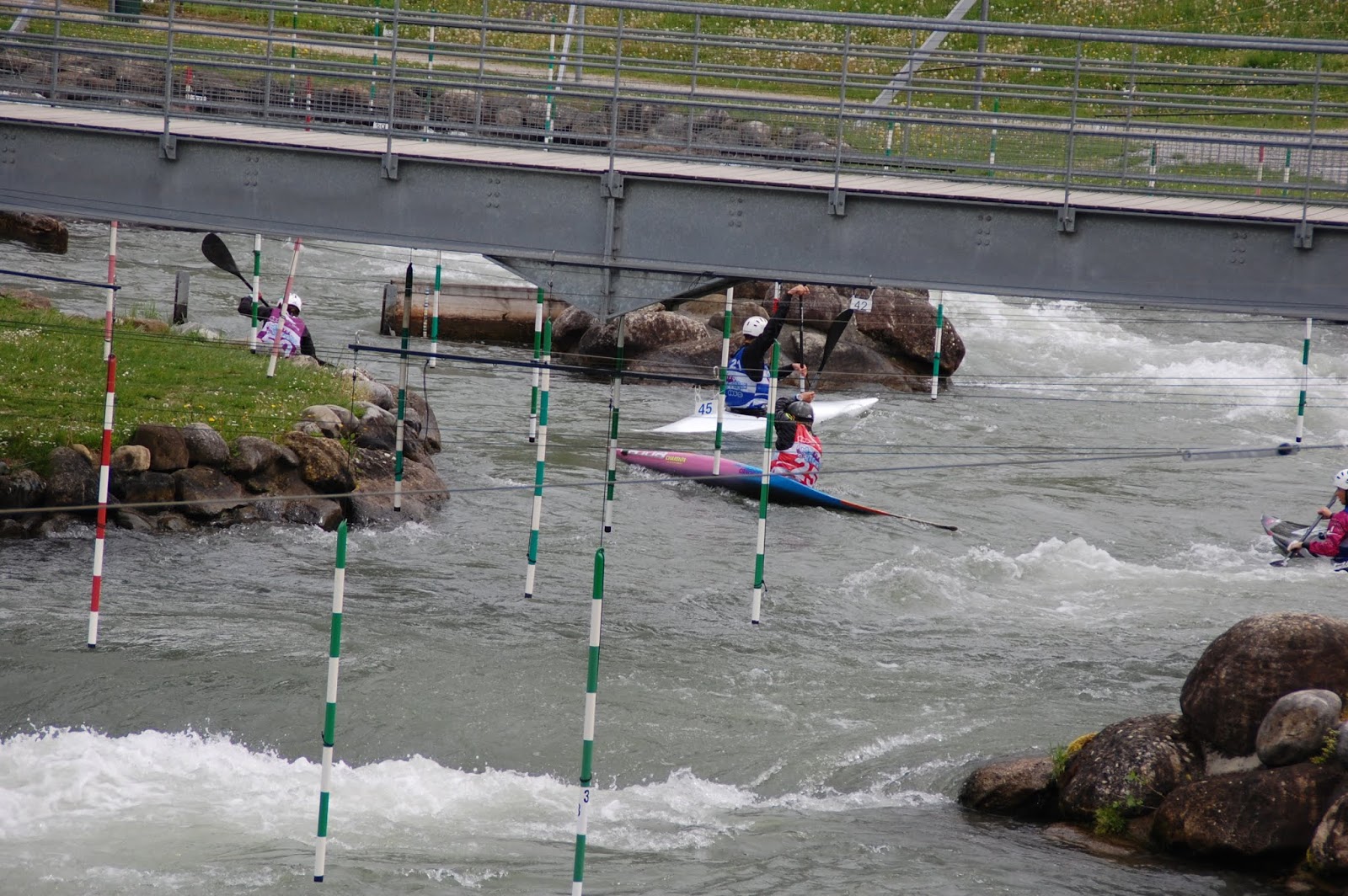
And so endeth the lesson. Let us now praise famous men. We returned whence we came after a quick visit to the new centre of water sports, where the sportier aquatic Palois were paddling for all their worth around a series of hurdles suspended from rails that bridged the water, while the more bourgeois and leisured Palois surveyed them from the centre's chi-chi restaurant. Yes, Pau is reinventing itself. Kayaking schmayaking, personally. Being a history man at heart (and a poor swimmer), I'm more attracted to its past.

Wednesday, April 25, 2018

April: Pie in the Sky


For nine or more years, I have been deluding myself. I discovered this month that I am not a self-employed writer – as I have been telling people – but I am actually salaried. The trouble is, I don't know who pays my pitiful salary. If I did, I could go on strike and/or get myself dismissed and then sue my employer for wrongful dismissal, as per the popular ruse among the French salaried fraternity.

I discovered this startling – and somewhat unsettling – piece of information quite by chance. Having decided to take my official retirement as from 1st November later this year, I went about the daunting task of trying to find out how to do it. Needless to say, the French retirement system is incredibly complicated and confusing: it's full of all kinds of organisations with four or more capital letters that stand for confusion. A lot of them begin with the letter C for Caisse, meaning cashbox, till and savings bank. 

That much I'd gleaned when I set out on my quest earlier last week, armed with a demonstration of the new online portal by my friend Nick, who plans to retire in August – two years before me, age-wise. I have dragged my heels because a) my annual French retirement will amount to just over a thousand euros, which will just about cover the annual taxe foncière on this house (a kind of tax on the land on which the house is built, kind of), and b) because I get a debilitating case of the heebie-jeebies every time I even think of the French administrative system, let alone attempt to negotiate it.

Since 2009, I have been paying my dues to an organisation called Agessa, which is based in Paris and linked to the Maison des Artistes. Agessa handles writers in various guises and photographers, I believe. For many years, I thought that they would eventually pay my retirement. But no. They divert my dues to a C-organisation that will pay my basic pension. This is then made up to a sum that depends on the number of points you've earned by a mutuel – or complementary retirement organisation. Mine goes by the acronym IRCEC (with two Cs). It is sub-divided into three sub-organisations according to what branch of the arts you come under. Mine's something like RAAP, which certainly ought to but doesn't begin with a C.

My mission, Jim, which I chose to accept only out of sheer necessity, was to find out which organisation would pay my basic pension so I could ask them if I could please retire on the 1st November. So I set off on the new portal and managed to create une espace personnelle or personal space.

'You all right, dad?' my daughter asked every time she ventured upstairs or passed by the bottom of the stairs and looked up to see me sitting in front of the screen with my head in my hands.
'No, I'm going round and round in circles here. Getting nowhere fast.'
'Oh dear. Can I help?'
'No. Thank you, love. I don't think anyone can help.'


Although, for example, I discovered that I had the right to organise a face-to-face meeting with someone before 'launching my demand', every time I tried, I received the mystifying message, Aucun lieu d'accueil trouvé pour cette recherche. Which means roughly, No place of welcome found for this search. Which means God-knows-what.
Close to self-immolation, I picked up the phone and dialled a few telephone numbers uncovered by my dispiriting research. After long waits, I spoke to two people whom you might at best describe as matter-of-fact. They helped me not one jot. Which deepened the sense of futility.

But as has been so often the case in this perplexing country, at your darkest hour – just when you are ready to burst into tears or drink hemlock – you stumble serendipitously on someone (whisper the words) nice and helpful. I dialled a number I found on a suspiciously out-of-date website for an organisation I'd never heard of. A woman picked up the phone on the first ring. Perhaps detecting the note of hopelessness in my voice, she spent 25 minutes patiently and clearly demystifying the subject. She even directed me to a pdf to download that explained it all (not very clearly) in diagrammatic form. The problem I'd experienced was because I'd tried to venture down the Indépendant route. I should have been selecting the tab for Salariés.

I went back to the portal and obtained my illustration of the riches that awaited me. So now, I imagined, I could arrange my preparatory interview on line. Only it still came up No place of welcome for this search. Which gave me the faintest whiff of what it must be like – every day – for a refugee.

Meanwhile, in her parallel world of clients and consultations, the Good Wife is trying to obtain the status of accredited trainer for the courses she also runs, principally so she won't have to pay her crippling three-monthly TVA bills. This has brought her up close and impersonal with a little known but singularly ghastly administrative quango based in the good-for-nothing city of Poitiers. There they practise the functionary's ruse of Keep it moving. In other words, when another file lands on your desk, you find a way of passing it on to someone else or going back for further information. I speak from experience, although being cursed with a conscience, I lived by the credo during my 15-year tenure that The buck stops here.

In trying to satisfy some specious request for further details, my poor wife made the mistake of phoning the quango. Her usual interlocutrice was absent and some even worse dragon launched into a diatribe about the stress she was labouring under. Unable to get a word in edgewise, she somehow managed to maintain the dignity and patience of a saint. Nevertheless, she was effectively told that she really didn't have a chance in Hades, so it wasn't worth pursuing her demand. She will, because she's determined not to be cowed by unbelievers.

However, we're already discussing contingency plans. Some lifelong trainer she knows of apparently refuses to pursue official dispensation. Even if granted, it has to be renewed annually, thereby creating more folders to move from in-tray to in-tray until one party cracks. The trainer was told by his accountant that the only alternative to hoop-jumping was to cheat. It's incredible the number of times we've heard words to the same effect during 22+ years here. It leads you to believe that corruption must be as endemic in France as it is in Italy and Greece. 

Back in the DisUK, it all seems deceptively easier. Despite all the headline-grabbing political mess and the winds of xenophobia unleashed by the great Brexit deception, life in well-heeled middle-class Romsey potters on at the kind of leisurely pace my father manages on his morning perambulations. I led him around for a few days, deputising for my sisters while they took a break from keeping the Ageing P in the style to which he has become accustomed after the death of our ascetic mother. We dipped into charity shops and took coffee and croissants at Luc's delicatessen and laughed about the knitted bollards. The town was 'yarn-bombed' – to use the term my daughter revealed – in aid of the local festival. Charities, clubs, associations and groups of individuals created all kinds of crazy woollen bollard-cosies in aid of... something. Perhaps simply our amusement. 

I began my self-employed career back in my homeland. If you want to call yourself a training consultant, as I did briefly, you call yourself that. You then sink or swim according to your self-belief and the amount of effort you're prepared to put in. I largely sank, which was one reason for moving to France. In any case, being salaried is no big deal in this day and age of short-term contracts and evaporating job security. A self-employed person pays a modest amount of money into the National Insurance and trusts that, when it's time to hang up the accounts, the government will still be solvent enough to pay out a decent monthly pension. I have a few more years yet to wait and see whether or not the promised Shangri-La will prove to be pie in the sky.